
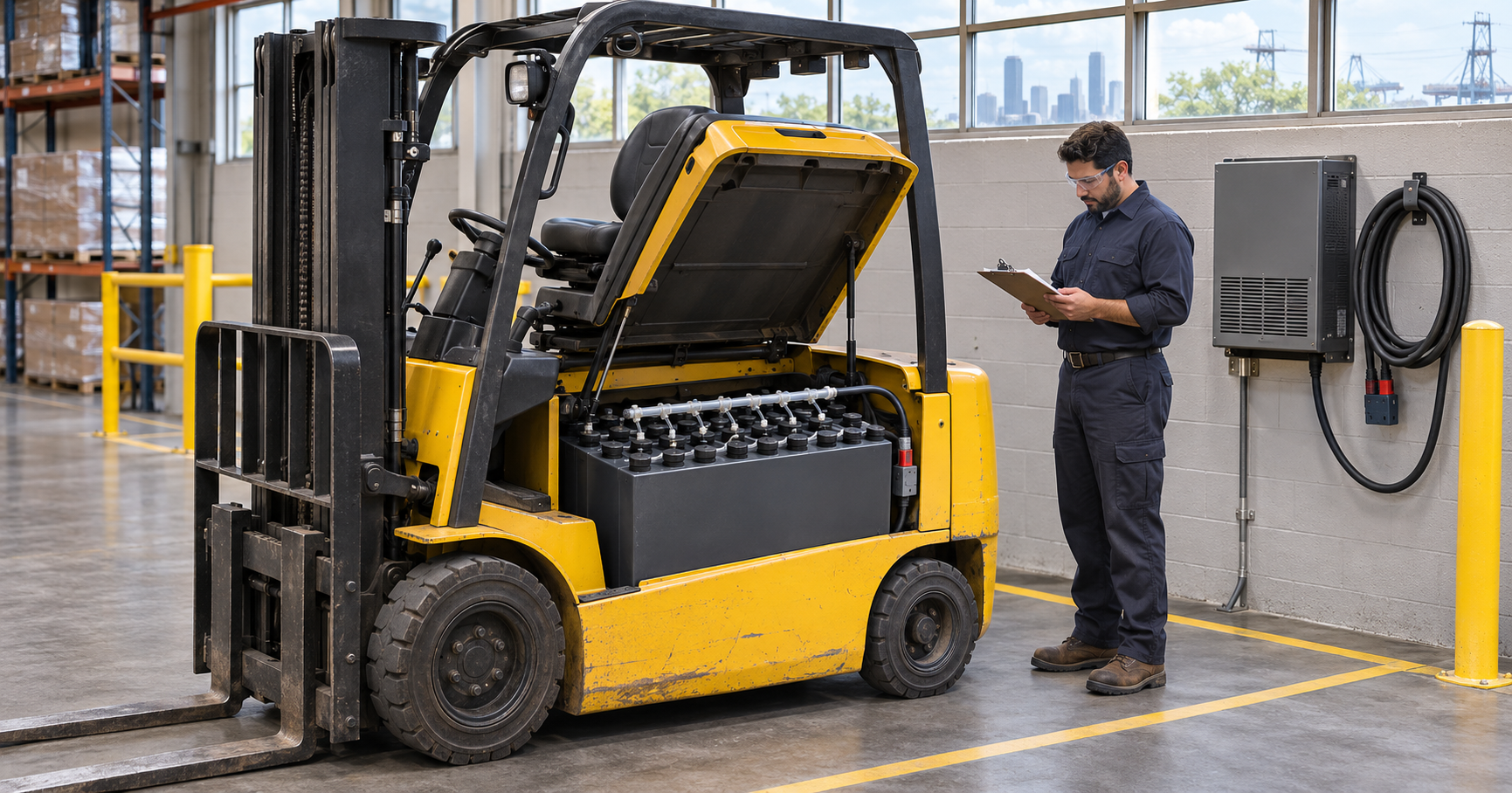
Forklift Battery Care: Watering, Equalizing, and Charging Schedules
November 25, 2026 4:29 pm Leave your thoughtsIn Houston warehouses and distribution centers, forklifts keep freight moving through the Port of Houston corridor, along the Beltway 8 industrial parks, and across Southeast Texas. When a forklift battery fails early, the whole operation feels it. Consistent watering, equalizing, and charging routines are the simplest way to protect one of the most expensive components in your fleet.
Quick Answer
Forklift battery maintenance for flooded lead-acid batteries comes down to three habits: water after charging using distilled or deionized water, run an equalizing charge on the schedule the manufacturer recommends, and recharge when the battery reaches about 20 to 30 percent remaining rather than running it flat. Letting batteries cool after charging and keeping the charging area clean and ventilated also extends battery life.
Forklift Battery Basics Houston Facility Managers Should Know
Forklift battery basics start with understanding how heat, usage, and charging habits affect battery life.
- Flooded lead-acid batteries lose water during charging and need regular top-offs.
- Houston heat can increase water loss and accelerate internal wear, especially in warehouses without climate control.
- Deep discharges below about 20 percent can shorten battery life.
- Equalizing charges help balance cells and reduce sulfation buildup.
- Charging areas need ventilation because batteries release hydrogen gas while charging.
Why Battery Care Matters in Southeast Texas
Battery care matters in Southeast Texas because high temperatures and humidity put extra stress on industrial batteries. Facilities that run multiple shifts, common in distribution and port-related operations, also cycle batteries more often, which magnifies small maintenance mistakes.
At Texford Battery Co, we have served Houston since 1931. We offer access to more than 3,000 battery products along with testing, charging, and installation services for industrial power systems.
How to Water a Forklift Battery
Water a forklift battery after it has been fully charged, not before, unless the plates are exposed. Charging causes the electrolyte to expand, so watering first can lead to overflow and acid spills.
- Use distilled or deionized water, never tap water.
- Fill to the level recommended by the battery manufacturer, usually just below the vent well.
- Check water levels on a regular schedule, often weekly, and more often in hot conditions.
- Consider a single-point watering system for large fleets.
- Wear appropriate eye and hand protection.
What Is an Equalizing Charge?
An equalizing charge is a controlled overcharge that balances the voltage of individual cells and helps break down sulfate buildup on the plates. Over time, cells can drift apart in charge level, and equalizing helps bring them back into balance.
Many manufacturers recommend equalizing on a regular schedule, often weekly or after a set number of cycles. Always follow the battery and charger manufacturer’s guidelines, since too-frequent equalizing can increase water loss and heat.
Building a Charging Schedule
A good charging schedule recharges batteries when they reach about 20 to 30 percent remaining and allows a full, uninterrupted charge. Many conventional flooded batteries follow a pattern of a full shift of work, a full charge, and a cool-down period before use.
- Avoid frequent partial or opportunity charging on batteries not designed for it.
- Let the charge cycle complete without interruption.
- Allow batteries to cool before returning them to service.
- Rotate batteries in multi-shift operations so each gets proper rest.
Warning Signs of Battery Problems
The clearest warning sign of a battery problem is reduced runtime during a normal shift. Other signs include:
- Batteries that get unusually hot during charging or use.
- Low or uneven electrolyte levels between cells.
- Corrosion on terminals or cables.
- Acid residue on the battery top.
- Slow lifting or sluggish performance.
- A swollen or damaged battery case.
When to Call a Battery Professional
You should call a battery professional when batteries lose runtime, show heat or corrosion problems, or fail testing. Routine watering and cleaning can be handled by trained staff, but diagnosing weak cells and evaluating replacement options is best left to specialists.
Common Forklift Battery Mistakes
- Mistake: Watering before charging. Consequence: Overflow and acid spills. Better approach: Water after a full charge.
- Mistake: Using tap water. Consequence: Minerals can contaminate cells. Better approach: Use distilled or deionized water.
- Mistake: Running batteries until they die. Consequence: Shortened battery life. Better approach: Recharge at about 20 to 30 percent.
- Mistake: Skipping equalizing charges. Consequence: Unbalanced cells and sulfation. Better approach: Follow the manufacturer’s equalizing schedule.
A Common Local Scenario
A common local scenario involves a Houston distribution center running two shifts in a hot warehouse during summer. This is a typical example, not a case study. Operators charge batteries during breaks and water them whenever they remember. Runtime drops and batteries run hot. Switching to full charges, scheduled watering after charging, and regular equalizing helps restore consistent performance.
How We Help With Industrial Battery Needs
We help facilities with industrial battery needs through battery testing, charging, installation, and access to a wide range of battery products. Our knowledgeable team can help you identify the right power source for your equipment.
Forklift Battery Maintenance Checklist
| Task | Typical Timing | Notes |
|---|---|---|
| Check water levels | Often weekly | More often in hot conditions |
| Water battery | After full charge | Distilled or deionized water |
| Equalizing charge | Per manufacturer, often weekly | Follow charger settings |
| Recharge | At about 20 to 30 percent | Allow full, uninterrupted charge |
| Clean battery top | Regularly | Remove acid residue and dirt |
Serving Houston and Southeast Texas
We serve facilities in Houston, Harris County, Fort Bend County, Montgomery County, Galveston County, Brazoria County, and nearby communities including Pasadena, Baytown, and Jersey Village.
The Cost of Poor Battery Maintenance
The cost of poor battery maintenance includes shorter battery life, unexpected downtime, and early replacement of expensive equipment. Simple routines can protect your investment.
Frequently Asked Questions
How often should I water a forklift battery?
Many facilities check water levels weekly and water after a full charge, but hot Houston conditions may require more frequent checks.
Should I water a forklift battery before or after charging?
Water after charging, unless the plates are exposed. Watering before charging can cause overflow as the electrolyte expands.
How often should a forklift battery be equalized?
Follow the manufacturer’s recommendation, which is often weekly or after a set number of cycles.
When should I recharge a forklift battery?
Recharge when the battery reaches about 20 to 30 percent remaining to avoid deep discharges that shorten battery life.
Does heat affect forklift batteries in Houston?
Yes, heat increases water loss and internal wear, so batteries in hot warehouses need closer monitoring.
Why does my forklift battery get hot?
Heat can result from overcharging, low water levels, heavy use, or aging cells. Testing can help identify the cause.
Good battery habits keep forklifts running and protect your budget. With more than nine decades in Houston, we are ready to support your industrial battery needs.
Keep Your Houston Forklift Fleet Powered
Our team can help you test, charge, and choose the right batteries for your equipment.
Categorised in: Batteries
This post was written by admin