
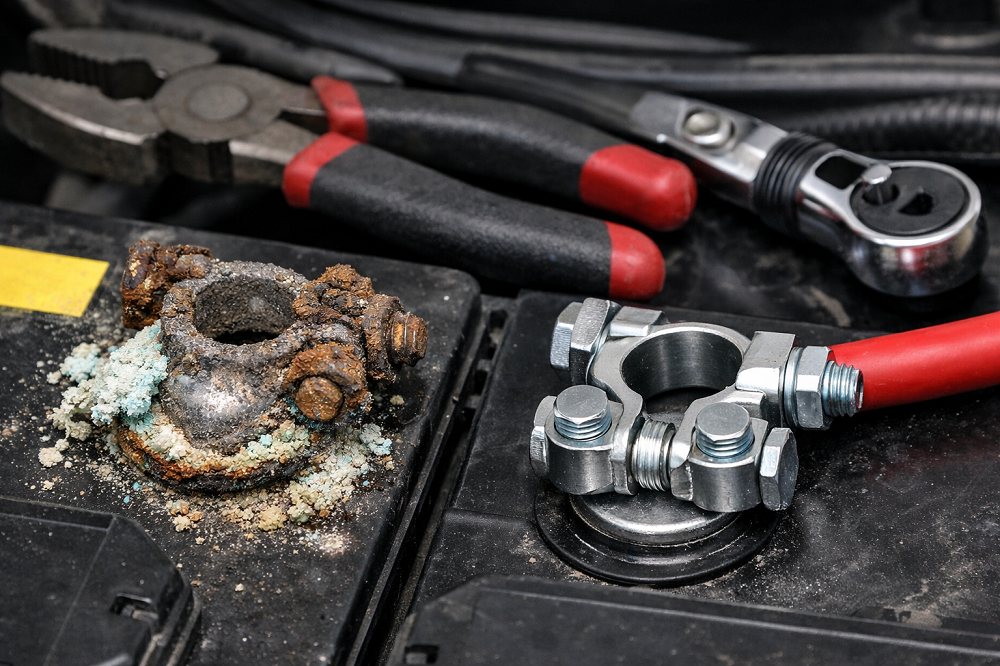
When to Replace Battery Terminal Clamps
February 19, 2026 8:52 pm Leave your thoughtsBattery terminal clamps are small components that perform a crucial job inside any vehicle. They connect the battery to the electrical system, allowing current to flow reliably so the engine can start and accessories can function properly. When these clamps fail, the entire vehicle can become unreliable or refuse to start at all. Although they appear simple, their condition has a major influence on performance, safety, and long term battery life. Because of this, knowing when to replace battery terminal clamps can prevent breakdowns and save money by protecting the rest of the electrical system.
Many drivers overlook the clamps until they cause problems, often assuming the battery itself is the source of issues like slow cranking or occasional failure to start. While batteries do wear out, the connection between the battery and the cables is equally important. Damaged or deteriorating clamps interrupt the flow of electricity, leading to symptoms that can mimic a dying battery. If you understand the signs battery terminals need replacing, you can act early and avoid unnecessary repairs or replacements.
This guide explores how battery terminal clamps work, what signs to watch for, how long they typically last, and when it is time to replace them. By the end, you will have a clear understanding of how to protect your vehicle and maintain a dependable electrical system.
Recognizing Signs Battery Terminals Need Replacing
The first step toward preventing electrical problems is learning to recognize signs battery terminals need replacing. Corrosion is one of the most common indicators. A buildup of white, green, or bluish material around the clamps can interfere with electrical conductivity. Light corrosion can often be cleaned, but heavy or recurring corrosion usually signals that the clamps have weakened and will not maintain a secure connection.
Another sign is difficulty starting the engine. If the vehicle cranks slowly, starts intermittently, or fails to start after sitting overnight, the clamps may no longer be holding the cables firmly against the battery posts. When the connection becomes loose or inconsistent, electricity cannot flow efficiently. Drivers often replace the battery at this stage only to discover that the real issue lies with the clamps.
Cracks or visible damage provide another clear signal. Metal fatigue, heat exposure, and vibration can weaken the clamps over time. If the clamp appears bent, fractured, or overly worn, it will not be able to grip the terminal properly. A damaged clamp can also cause arcing, which is a tiny spark created when electrical contact is unstable. Arcing increases heat and can lead to further deterioration.
Finally, swelling or softening of the cables near the clamp suggests internal corrosion that may have reached the connection point. When moisture or battery acid enters the cable, it travels under the insulation and gradually destroys the copper strands. Once this happens, even a good clamp cannot maintain proper conductivity. Replacement becomes the only safe and effective option.
Why Battery Terminal Clamps Wear Out Over Time
Battery terminal clamps experience wear for several reasons, and understanding these causes can help you detect problems earlier. Exposure to moisture is one of the most significant factors. Water vapor, rain, or high humidity can enter the engine compartment, contact the clamps, and trigger oxidation. Once oxidation begins, corrosion follows, and conductivity decreases steadily.
Chemical exposure plays a major role as well. Batteries release small amounts of acid vapor during normal use. This vapor can seep into the clamps and cause corrosion from the inside. In older vehicles, or in vehicles exposed to harsh climates, this process accelerates. Drivers who make frequent short trips may also see faster wear because the battery works harder, producing more vapor.
Temperature fluctuations contribute to clamp deterioration. Extreme heat softens and weakens metal surfaces. Extreme cold increases brittleness. In regions with hot summers and cold winters, the clamps expand and contract repeatedly. Over time, this movement loosens the connection and reduces the strength of the metal.
Vibration is another common cause. Every vehicle experiences movement, but rough roads, off road driving, or aging engine mounts increase vibration. This constant shaking loosens fasteners, stresses the clamps, and can even cause them to crack. Since the clamps must maintain firm and uniform pressure on the battery post, any loss of structural integrity affects performance.
Finally, improper installation or overtightening can reduce lifespan. If a clamp is tightened too aggressively, it can deform or lose its ability to grip evenly. If it is not tightened enough, the cable can move and cause electrical resistance. These issues are easy to overlook and often appear months after the initial installation.
How to Inspect Battery Terminal Clamps Correctly
Inspecting battery terminal clamps does not require professional tools or advanced knowledge, but it does require attention to detail. Start by visually examining the clamps. Look for discoloration, powdery residue, dark spots, or pitting. These changes indicate chemical reactions that have weakened the metal and reduced conductivity.
Gently tug on each cable. The connection should feel firm and stable. If the clamp moves or rotates around the battery post, the connection is too loose to function safely. Movement indicates that the clamp may be stretched, damaged, or unable to tighten enough to maintain electrical flow.
Check the inside of the clamp if possible. Remove the clamp from the battery post only after the battery is disconnected completely. Examine the inner surface for corrosion or wear. If the metal inside is rough, uneven, or deteriorating, replacement is the best option.
Examine the cables where they enter the clamp. Look for swelling, soft spots, or cracking. These signs often reveal hidden corrosion inside the cable. Cleaning the exterior will not solve this problem because the internal copper strands have already been damaged.
Finally, check for heat marks. Darkened areas or melted plastic near the clamps can result from overheating or arcing. This condition is dangerous and requires immediate replacement to prevent electrical failure or potential fire hazards.
When Replacement Is the Best Solution
Not all issues can be corrected through cleaning or adjustment. In many cases, replacing battery terminal clamps is the safest and most reliable solution. Replacement becomes necessary when corrosion returns shortly after cleaning or when the clamps show visible physical deterioration. If tightening the clamp no longer provides a secure fit, the metal has likely worn past the point of safe use.
If the vehicle shows electrical symptoms even after installing a new battery, that is another strong indication that the clamps need replacement. Poor connections can mimic battery failure. Replacing the clamps ensures that the new battery performs as expected and is not strained by intermittent contacts.
Any signs of arcing or overheating require immediate action. Heat can travel through the cable, damage insulation, and compromise the entire electrical system. By replacing the clamps early, you protect the vehicle from more serious problems and prevent unexpected breakdowns.
Replacement is also recommended if you notice corrosion inside the cables. Since internal corrosion cannot be reversed, the safest option is to install new clamps and possibly new cable ends. This restores electrical continuity and prevents voltage drops that can harm sensitive electronic components.
Conclusion
Battery terminal clamps may seem like small parts, but their role in a vehicle is critical. They provide the pathway for electricity to travel from the battery to the engine and all electrical accessories. When they wear out, corrode, or loosen, the entire electrical system becomes vulnerable to failure.
By recognizing signs battery terminals need replacing, inspecting the clamps regularly, and understanding the causes of wear, you can maintain a reliable connection. Prompt replacement prevents larger electrical issues, extends battery life, and ensures that your vehicle starts smoothly every time.
Taking care of battery terminal clamps is a simple yet essential part of vehicle maintenance. With regular attention and timely replacement, you can avoid costly repairs and enjoy dependable performance in every season.
Need a Battery Store in Houston, TX?
At Texford Battery Co, we pride ourselves on being much more than just another battery specialist. We credit our seven decades of business growth and success to the unmatched service and expertise our team provides. Texford Battery Co is not simply a supplier – we helped pave the way for many innovations in the battery distribution industry that continue to keep prices competitive for our customers. Among them, we were a leader in the creation of the Battery Marketing Group in the 1970s. As a founding member of this national network of battery distributors and manufacturers, we are able to offer up to 10,000 of the industry’s top products to our customers at the lowest cost. Call us today!Categorised in: Battery Service
This post was written by admin